Trauma recovery is often discussed as if insight alone can carry the work. For some people, careful reflection and verbal processing are deeply helpful. For others, words arrive late, or not at all. The body reacts first. It startles, braces, freezes, collapses, avoids touch, scans the room, and forgets to breathe fully. Long after the mind understands that a threat has passed, the nervous system may still behave as if danger is present. That gap between knowing and feeling is where movement therapy can become especially valuable.
In clinical settings, I have seen people describe trauma with remarkable clarity while their shoulders stayed lifted to their ears, their hands remained clenched, and their legs shook under the chair. I have also seen people struggle to narrate what happened, yet respond almost immediately when invited to notice the pressure of their feet on the floor, the sway of standing, or the small relief that comes with a longer exhale. These are not dramatic breakthroughs. They are modest, physical moments that tell us something important. Recovery is not only a cognitive task. It is also a bodily one.
Movement therapy offers a gentle route into trauma therapy because it does not require a person to force language onto an experience that may have been stored in fragments, sensations, impulses, and defensive patterns. It gives the body a voice without making the person relive everything at full intensity. Used skillfully, it can support regulation, restore a sense of agency, and help people rebuild trust in themselves and in relationships.
Why trauma lives in the body
Trauma is not defined only by what happened. It is also shaped by what the nervous system had to do to survive. When a person faces overwhelming threat, the body mobilizes fast. Heart rate rises, muscles prepare for action, attention narrows, digestion slows, and the system prioritizes survival over reflection. If fight or flight is impossible, freeze or collapse may take over. These are not character flaws. They are adaptive responses.
The trouble begins when these responses remain active after the event. A person may feel chronically keyed up, numb, disconnected, restless, exhausted, or strangely absent from their own life. Some become highly organized and controlled because control feels safer than uncertainty. Others avoid routines, conversations, or closeness because predictability itself feels threatening. In attachment therapy, this is often an important theme. Early relationships teach the nervous system whether closeness is soothing, intrusive, inconsistent, or dangerous. If the original injury happened in relationship, healing often has to happen there too, including in the therapeutic relationship.
This is one reason somatic therapy has become such an important part of contemporary trauma treatment. It attends to posture, breath, tension, movement, sensation, and Grief counseling physiological states rather than focusing only on thoughts and memories. The goal is not to replace talking. It is to widen the field so that healing can include the parts of experience that words do not fully reach.
What movement therapy actually looks like
The phrase movement therapy can create the wrong picture. People sometimes imagine a dance studio, expressive choreography, or something performative. In reality, trauma-informed movement work is often subtle. A session may involve shifting weight from one foot to the other, tracking the impulse to turn away, noticing the urge to curl inward, practicing reaching and pulling back, or exploring what changes when the spine lengthens slightly. Sometimes the work happens seated. Sometimes a person barely moves at all.
The therapist is not looking for aesthetic expression. The therapist is watching for regulation, choice, and meaning. A tiny movement can carry a great deal of information. When someone consistently holds their breath before speaking, that matters. When their chest softens while pushing gently against a wall, that matters too. When a client says, “I did not realize how much I wanted to step back,” and then discovers relief in actually taking that step, something important has happened. The body has completed a response that may have been interrupted long ago.
This approach overlaps with somatic therapy, but it also draws from movement observation, developmental patterns, and relational attunement. In practice, it may include grounding, mirroring, pacing, orienting to the room, rhythmic movement, bilateral movement such as walking, and carefully titrated expressive work. Titration matters. Too much activation too quickly can flood the system. Too little challenge can leave a person stuck in the same narrow band of functioning. Good trauma therapy constantly negotiates that middle ground.
Gentle does not mean weak
Some clients are skeptical at first because gentleness seems too modest for the scale of their pain. They have often spent years white-knuckling their way through symptoms, pushing themselves to function, or trying to think their way out of panic, shutdown, or relational chaos. The idea that a small sway, a paced walk, or a simple arm press could matter can sound almost insulting.
Yet the nervous system often responds better to respectful pacing than to force. Gentle work is not passive. It is precise. It allows the person to approach survival energy without being consumed by it. A client who cannot tolerate eye contact for more than a second may not need a dramatic catharsis. They may need repeated experiences of looking away, looking back, and discovering that nothing terrible happens in that sequence. Another client may need to feel the strength in their legs after years of dissociation from the lower body. These are quiet interventions, but they are not small in effect.
One of the most meaningful shifts I see is when clients begin to recognize bodily cues early enough to respond to them. Instead of saying, “I have no idea why I exploded,” they start to say, “My jaw got tight, my vision narrowed, and I stopped hearing the other person clearly.” That kind of recognition creates room for choice. And choice is central to trauma recovery. Trauma steals agency. Healing restores it in increments.
How movement supports regulation
Regulation is not the same as being calm all the time. It means the ability to move through states without getting trapped in them. A well-regulated system can activate when needed, settle when the moment passes, and recover after stress. Trauma disrupts that flexibility. People may swing between hyperarousal and collapse, or live in a flat, narrowed state that feels emotionally distant.
Movement can help because it directly engages the systems involved in arousal and settling. Rhythmic walking, rocking, stretching, pushing, twisting, or even gently tapping the feet can change autonomic state. So can orienting, which means looking around the environment and letting the body register that the present moment is different from the original danger. These interventions are deceptively simple. Their power lies in repetition and timing.
For example, a person who dissociates during conflict may learn to notice the first signs of going away: blurred hearing, cold hands, a sense of floating, and blankness behind the eyes. Before full dissociation sets in, the therapist might invite them to press both feet into the floor, turn the head slowly to look at three objects in the room, and push the palms together for several breaths. None of that resolves the underlying trauma by itself. But it can interrupt the slide into disappearance. Once the person remains present, deeper work becomes possible.
This is one place where movement therapy and grief counseling can overlap as well. Grief often has a bodily rhythm. It comes in waves, tightens the chest, drains the limbs, and can make people feel both restless and inert. Words are essential in grieving, but movement can support the process by giving shape to what feels otherwise too amorphous. Walking while talking, standing while crying, or making room for the body to bow, curl, or reach can help grief move instead of harden.
The role of attachment and relational safety
No movement intervention exists in a vacuum. The same action can feel soothing in one context and threatening in another. A client with a history of being watched, controlled, or humiliated may feel exposed by even simple invitations to move. This is why attachment therapy principles matter. The therapist must pay attention not only to the movement itself, but also to the relational meaning of being invited to move.
A well-attuned therapist offers choice at every stage. “Would it help to stand?” is very different from “Stand up.” “Notice what happens if you push your feet down, and stop at any point,” respects autonomy in a way that “Keep going, you are almost there” may not. For trauma survivors, especially those with developmental trauma, being able to decline, alter, or pause an exercise is not a side detail. It is often part of the treatment.
I remember a client who flinched whenever I mirrored her posture, even subtly. Mirroring is often used to support https://finnshea943.cavandoragh.org/grief-counseling-and-storytelling-sharing-to-heal attunement, but in her history, being copied had been mocking and invasive. We shifted course. Instead of reflecting her movement, I described observable choices and asked permission before any experiment. Over time, she developed enough trust to tolerate more shared movement, but only because the therapy respected the meaning of her reactions rather than treating them as resistance.
Attachment wounds often show up in movement patterns. Some people continually lean forward as if chasing connection that may disappear. Others pull back before contact even forms. Some collapse inward under attention, while others become rigid and over-composed. These patterns are not destiny, and they should never be overinterpreted in a simplistic way. Still, when observed with care, they can offer a practical map for healing.
What a session may feel like for the client
Clients often expect trauma therapy to involve either talking in detail about what happened or learning coping skills in a fairly structured way. Movement therapy can feel unfamiliar because it slows the process down and asks for embodied attention. At first, this can be frustrating. People may say, “I do not know what I feel,” or “This seems too basic.” That is common.
Usually the first phase is not about deep emotional excavation. It is about building capacity to notice sensation without immediate overwhelm. The therapist might ask where tension is strongest, whether the body wants more space or less, or what changes when one shoulder drops a fraction. Clients often discover that they are either disconnected from sensation or flooded by it. Both are workable. The therapist helps pace the experience so that the body becomes more legible over time.
There is often a moment, sometimes several sessions in, when a client realizes that the body has been communicating all along. A person who thought they had “anger issues” notices that rage comes after a sequence of shrinking, placating, and jaw clenching. Another who believed they felt “nothing” discovers tears immediately after their legs begin to move more freely. These moments can be surprisingly moving, not because they are dramatic, but because they restore coherence. The person begins to understand their own system instead of feeling ruled by it.
Where movement therapy helps most, and where caution is needed
Movement therapy can be particularly helpful for people who dissociate, live with chronic tension, feel cut off from emotion, or struggle to describe internal experience. It often supports survivors of developmental trauma, medical trauma, grief, domestic violence, and certain forms of attachment injury. It can also help people who become trapped in repetitive cognitive loops in standard talk therapy and need another doorway into the work.
At the same time, discernment matters. Severe dissociation, active psychosis, unstable medical conditions, acute intoxication, or intense panic that escalates with body focus may require modifications or a different starting point. Some people need a longer period of stabilization before direct somatic work is useful. Others benefit from very structured, externally focused movement rather than open-ended body awareness. Trauma therapy is not one-size-fits-all, and movement should never be imposed as the superior path.
Culture and identity matter too. The meaning of movement, stillness, touch, eye contact, and emotional expression varies widely. So does the meaning of being observed. A trauma-informed clinician must understand that what feels freeing to one person may feel transgressive or unsafe to another. Professional skill is not just technical. It is relational and contextual.
What good practice tends to include
When movement therapy is effective, several qualities are usually present:
Pacing that respects the nervous system rather than pushing for catharsis Explicit choice, including permission to stop, change, or decline Attention to present-moment safety, orientation, and regulation Curiosity about meaning without forcing symbolic interpretation Integration with broader treatment goals, not movement for its own sakeThese may sound straightforward, but they are easy to neglect in practice. The temptation to chase visible emotional release can be strong, especially when both therapist and client want relief quickly. Yet trauma work often progresses through accumulation, not spectacle. Ten experiences of tolerable activation followed by settling may do more for long-term recovery than one intense session that leaves the client dysregulated for days.
Bringing movement into daily life without turning it into homework
Some of the best carryover from therapy happens outside the office, but it should not become another arena for perfectionism. People recovering from trauma are often already skilled at failing themselves with rigid self-improvement plans. Helpful movement practices are brief, specific, and responsive to actual need.
A client who freezes before difficult conversations may benefit from walking for five minutes beforehand, letting the arms swing naturally, and then pausing to feel both feet before they speak. Someone whose grief hits hardest at dusk may find that slow stretching and a hand on the chest provide enough containment to get through the wave without shutting down. A parent who becomes overwhelmed by noise may learn to step into a doorway, press both palms to the frame, and breathe until the body feels less cornered.
The point is not to create an ideal routine. The point is to build a vocabulary of actions that support regulation and agency. Over time, these micro-practices can change how people inhabit their days. They may sit differently in meetings, pause sooner during conflict, sleep with less bracing in the shoulders, or notice the first signs of overload before it becomes a crisis.
Why movement can reach grief that words cannot
Grief deserves its own mention because it often coexists with trauma, and the body carries both. After a death, a betrayal, a loss of health, or the collapse of a hoped-for future, people frequently describe feeling heavy, unreal, agitated, or physically hollow. In grief counseling, language gives shape to meaning, memory, and relationship. But grief is not only narrative. It is sensory. It changes gait, posture, breath, appetite, and the felt sense of time.
Movement can help mourners stay connected to the living body while honoring what has been lost. That might mean taking the same walk every morning after a funeral because the rhythm steadies the system. It might mean swaying while holding a memory, or allowing the torso to curl around pain and then slowly uncurl. In some cases, rituals of movement become a bridge between absence and continuity. The body learns that sorrow can be immense without being endless in every moment.
This is especially relevant when grief is complicated by trauma. If the loss involved suddenness, violence, helplessness, or traumatic witnessing, the nervous system may not only mourn, it may also remain stuck in emergency. Here, movement therapy can support both strands of work, helping a person process grief while also reducing the bodily imprint of terror.
Choosing the right clinician
People looking for this kind of support should not assume that any movement-based class or any therapist who mentions the body is equipped for trauma treatment. Competent trauma therapy requires training in nervous system regulation, dissociation, pacing, consent, and relational safety. It also requires humility. Good clinicians do not treat every sensation as profound or every movement as diagnostic. They observe carefully, check assumptions, and stay grounded in what actually helps the client.
A useful first session often feels less impressive than people expect. It may involve slow questions, simple experiments, and a lot of attention to whether the client can stay present. That is a good sign. Trauma work built on steadiness tends to travel farther than work built on intensity.
A quieter path to recovery
Movement therapy does not promise a dramatic before-and-after story. Most real healing does not look like that. It looks like a person sleeping a little better, staying in their body during a hard conversation, crying without collapsing, recognizing anger before it detonates, or feeling their feet during a flashback and returning to the room more quickly than before. These are ordinary victories. They are also profound.
For many trauma survivors, the body became the place where fear settled, where boundaries failed, where grief lodged, and where connection felt risky. It makes sense that the body would also be part of the repair. When movement is offered gently, with precision and respect, it can help restore something trauma often takes away: the felt sense that a person belongs to themselves.
That is not a small thing. It is the ground that the rest of recovery stands on.
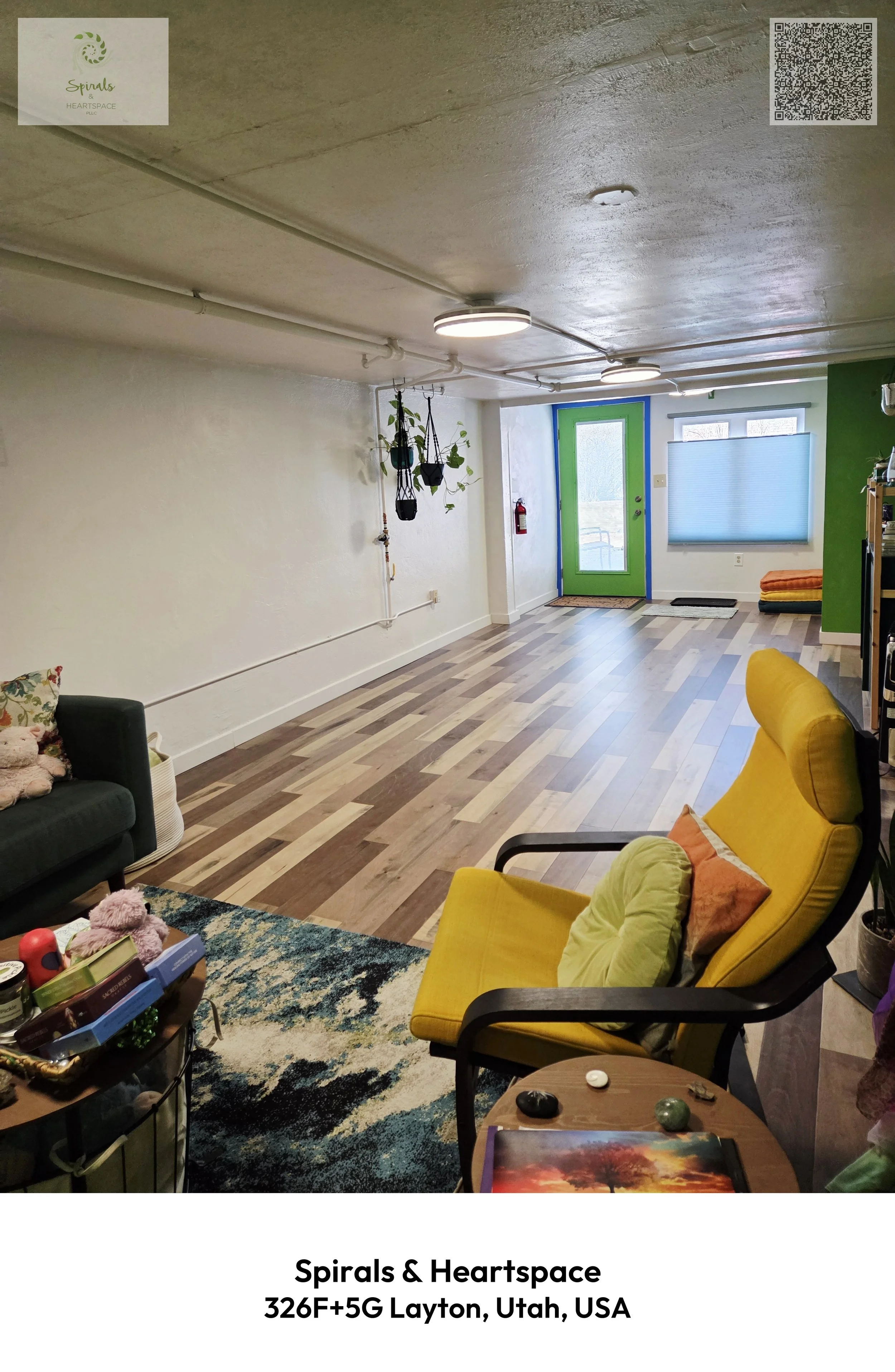
Spirals & Heartspace
Name: Spirals & HeartspaceAddress: 534 W Gentile St, Layton, UT 84041
Phone: (385) 301-5252
Website: https://spiralsandheartspacehealing.com/
Hours:
Sunday: Closed
Monday: 9:30 AM – 7:00 PM
Tuesday: 9:30 AM – 7:00 PM
Wednesday: 9:30 AM – 7:00 PM
Thursday: 9:30 AM – 7:00 PM
Friday: 9:30 AM – 7:00 PM
Saturday: Closed
Open-location code / plus code: 326F+5G Layton, Utah, USA
Coordinates: 41.0604503, -111.9762128
Map/listing URL: https://www.google.com/maps/place/Spirals+%26+Heartspace/@41.0604503,-111.9762128,766m/data=!3m2!1e3!4b1!4m6!3m5!1s0x875303311f1d4d1b:0xc6859e5e3fceafe2!8m2!3d41.0604503!4d-111.9762128!16s%2Fg%2F11x781dbvb
Embed iframe:
Socials:
Instagram: https://www.instagram.com/spiralsheartspace/
LinkedIn: https://www.linkedin.com/company/spirals-and-heartspace-pllc
TikTok: https://www.tiktok.com/@spiralsheartspace
X: https://x.com/SpiralsHea61786
YouTube: https://www.youtube.com/@SpiralsHeartspace
The practice is led by Ande Welling, a licensed clinical mental health counselor with training in dance/movement therapy, somatic work, EMDR, trauma care, relational neuroscience, and embodied attachment.
Listed services include therapy, coaching, consultation, authentic movement, trauma therapy, somatic therapy, grief counseling, movement therapy, and attachment therapy.
The practice serves adults who want a deeper body-aware approach to trauma, anxiety, depression, grief, burnout, self-abandonment, family patterns, and relationship wounds.
Spirals & Heartspace offers both in-person sessions in Layton and online therapy for clients in Utah.
The practice is locally positioned for clients in Layton, Kaysville, Farmington, Syracuse, Clearfield, Clinton, Roy, Ogden, Bountiful, Davis County, and nearby northern Utah communities.
The office is listed at 534 W Gentile St in Layton, with public listing hours Monday through Friday from 9:30 AM to 7:00 PM.
Prospective clients can call (385) 301-5252 or visit https://spiralsandheartspacehealing.com/ to ask about consultation options, session fit, and scheduling.
The public map listing for Spirals & Heartspace can help clients verify the Gentile Street office before planning an in-person appointment.
Popular Questions About Spirals & Heartspace
What is Spirals & Heartspace?
Spirals & Heartspace is a Layton, Utah psychotherapy and coaching practice offering somatic, trauma-focused, expressive arts, movement-based, and attachment-informed support for adults.
Who is the therapist at Spirals & Heartspace?
The official site identifies Ande Welling as the therapist, coach, movement facilitator, and guide behind Spirals & Heartspace. Listed credentials include LCMHC, BC-DMT, NCC, GL-CMA, BSE, EMDR Trained, and CCTP-II.
Where is Spirals & Heartspace located?
The matching public listing and LinkedIn profile list the address as 534 W Gentile St, Layton, UT 84041.
Does Spirals & Heartspace offer online therapy?
Yes. The official FAQ states that therapy is available in person or through a HIPAA-compliant telehealth platform for clients who live in Utah.
What services does Spirals & Heartspace provide?
Listed services include therapy, coaching, consultation, authentic movement, trauma therapy, somatic therapy, grief counseling, movement therapy, and attachment therapy.
What makes somatic therapy different from traditional talk therapy?
The official Layton page explains that somatic therapy works with body sensations, movement, and physical experience because trauma and emotional patterns can be held in the nervous system, not only in thoughts.
Do clients need dance experience for movement therapy?
No. The official Layton FAQ says no dance training or special physical ability is required, and that movement therapy uses a client’s natural capacity for movement to access emotions and process experiences.
Does Spirals & Heartspace accept insurance?
The official FAQ says the practice does not take insurance directly, but may provide superbills or bill for out-of-network benefits when applicable. Clients should confirm current reimbursement options directly before scheduling.
What are Spirals & Heartspace’s listed hours?
The matching public listing shows Monday through Friday from 9:30 AM to 7:00 PM, with Saturday and Sunday closed. Appointment availability should be confirmed directly.
How can I contact Spirals & Heartspace?
Call (385) 301-5252, visit https://spiralsandheartspacehealing.com/, or use the listed social profiles: https://www.instagram.com/spiralsheartspace/, https://www.linkedin.com/company/spirals-and-heartspace-pllc, https://www.tiktok.com/@spiralsheartspace, https://x.com/SpiralsHea61786, and https://www.youtube.com/@SpiralsHeartspace.
Landmarks Near Layton, UT
Spirals & Heartspace is located on West Gentile Street in Layton, Utah, with in-person therapy available locally and online therapy available for Utah residents. Clients near these landmarks can call (385) 301-5252 or visit https://spiralsandheartspacehealing.com/ to ask about somatic therapy, trauma therapy, movement therapy, grief counseling, attachment therapy, and consultation options.
- 534 W Gentile St — The listed office address for Spirals & Heartspace; clients can use the map listing to verify the office before visiting.
- West Gentile Street — The local street connected with the practice’s Layton office location.
- Downtown Layton — A practical local reference point for clients navigating central Layton.
- Layton Hills Mall — A major Layton shopping landmark and useful orientation point for clients traveling through the city.
- Interstate 15 near Layton — A major northern Utah route that helps clients reach Layton from nearby Davis County communities.
- Layton FrontRunner Station — A transit landmark for clients traveling by commuter rail through Davis County.
- Ellison Park — A local park and community landmark in Layton.
- Great Salt Lake Shorelands Preserve — A major natural landmark west of Layton and a recognizable Davis County destination.
- Hill Air Force Base — A major regional landmark near Layton and Clearfield.
- Kaysville — A nearby Davis County city listed in the practice’s surrounding service area.
- Farmington — A nearby Davis County community included in the broader local service-area language.
- Ogden — A nearby northern Utah city; clients can ask whether online Utah therapy or in-person Layton sessions are the best fit.